In many cybersecurity platforms today, the Attack Path has become a standard interface.
Security tools use it to visualize how an attacker might move through an environment, what assets are exposed, and how vulnerabilities create opportunities for compromise.
At first glance, the concept seems straightforward: map the path an attacker could take. But after working on the design of Attack Path interfaces across multiple cybersecurity products, I realized something important:
Attack Paths are rarely just paths.
They are attempt to represent something far more complex.
The Problem with “Paths”
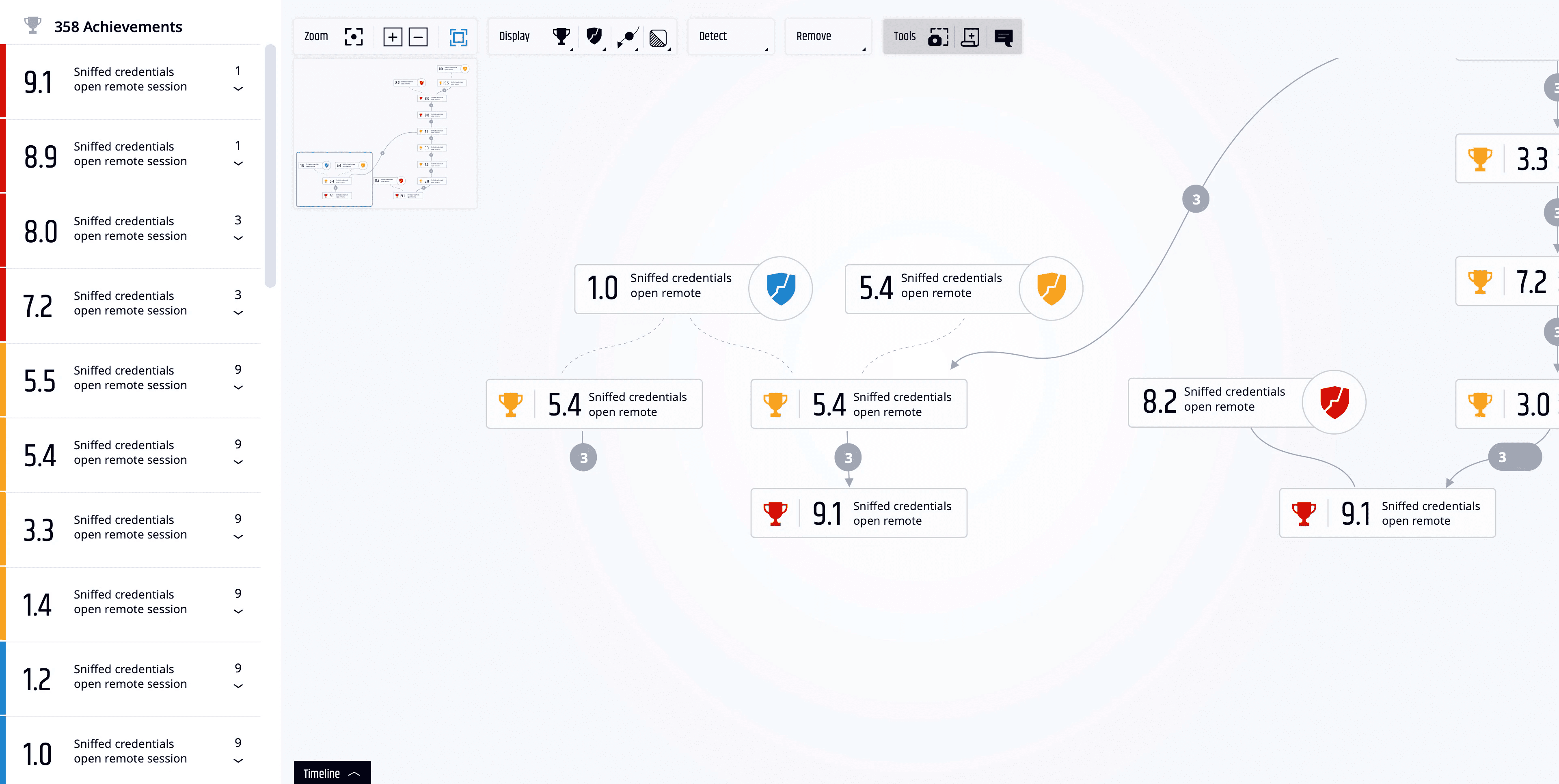
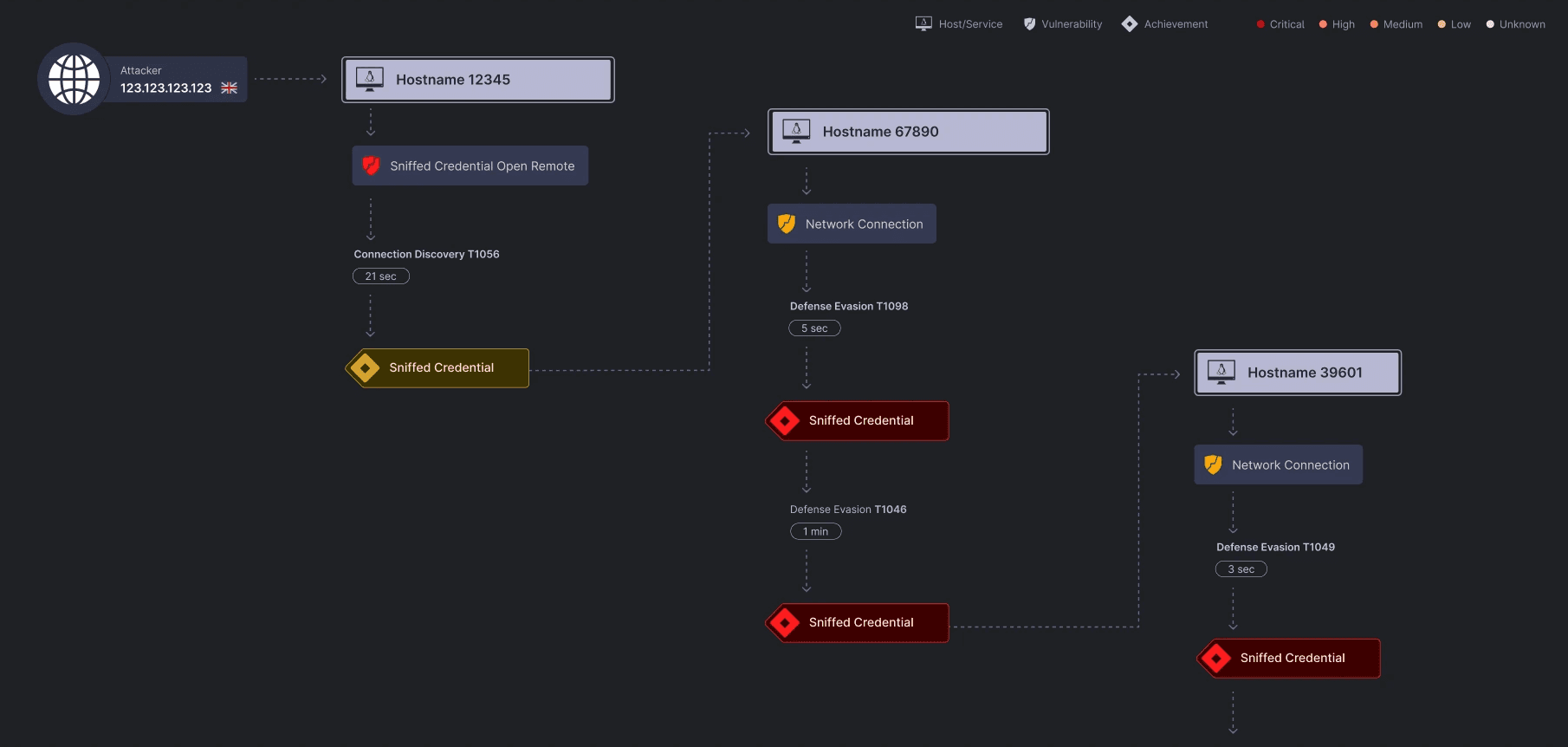
Most Attack Path interfaces are built around graphs.
Nodes represent assets or vulnerabilities.
Edges represent potential attacker movement or exploit chains.
While these visualizations can be useful, they often fail to answer the questions security teams actually care about:
How serious is this risk?
What should we fix first?
How realistic is this attack scenario?
What is the potential business impact?
How much will it cost to remediate?
Which weaknesses create the largest exposure?
A graph alone rarely answers these questions.
It shows structure, but not meaning.
And without meaning, even the most sophisticated visualization becomes just another security dashboard.
The Hidden Complexity of Attack Path Interfaces
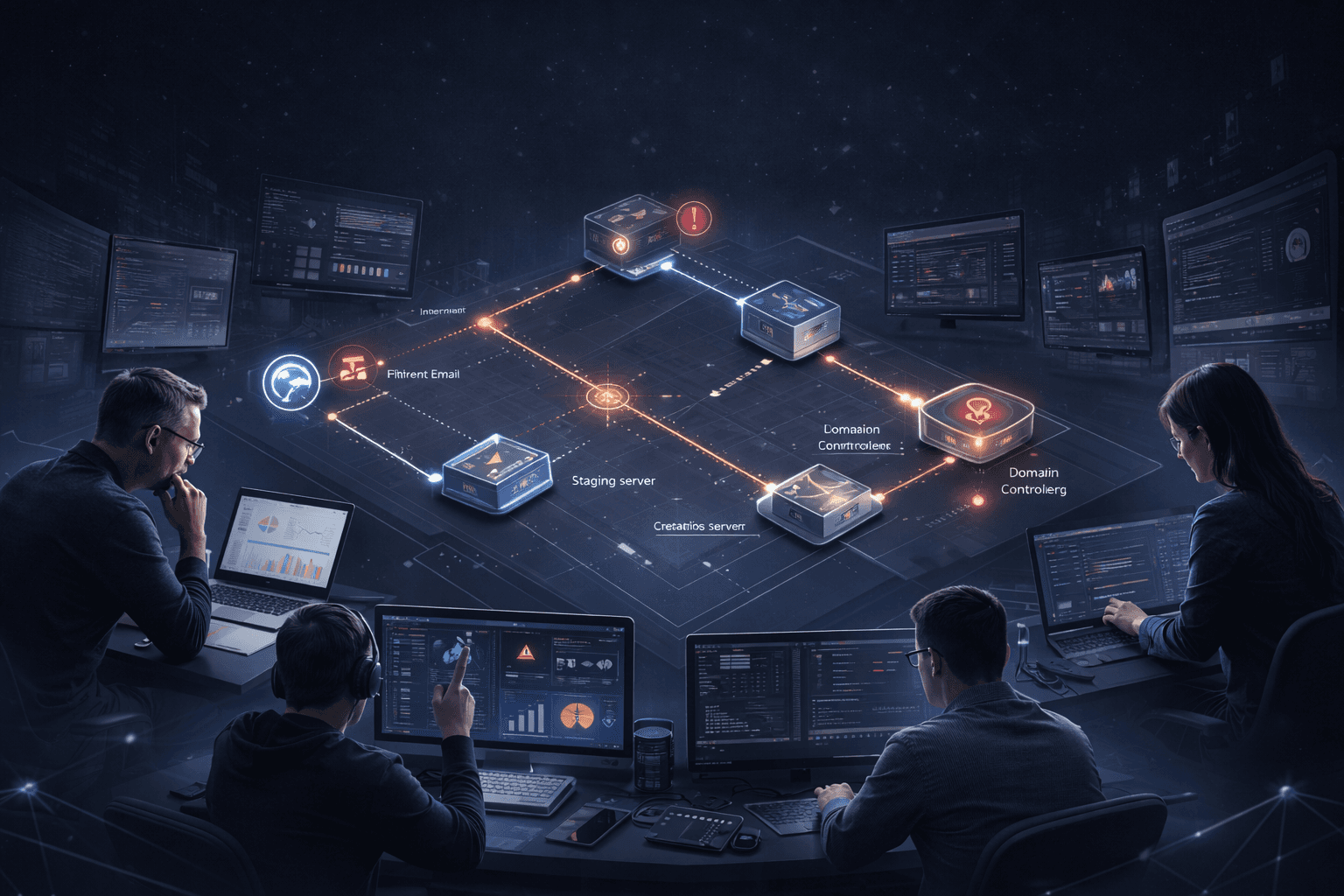
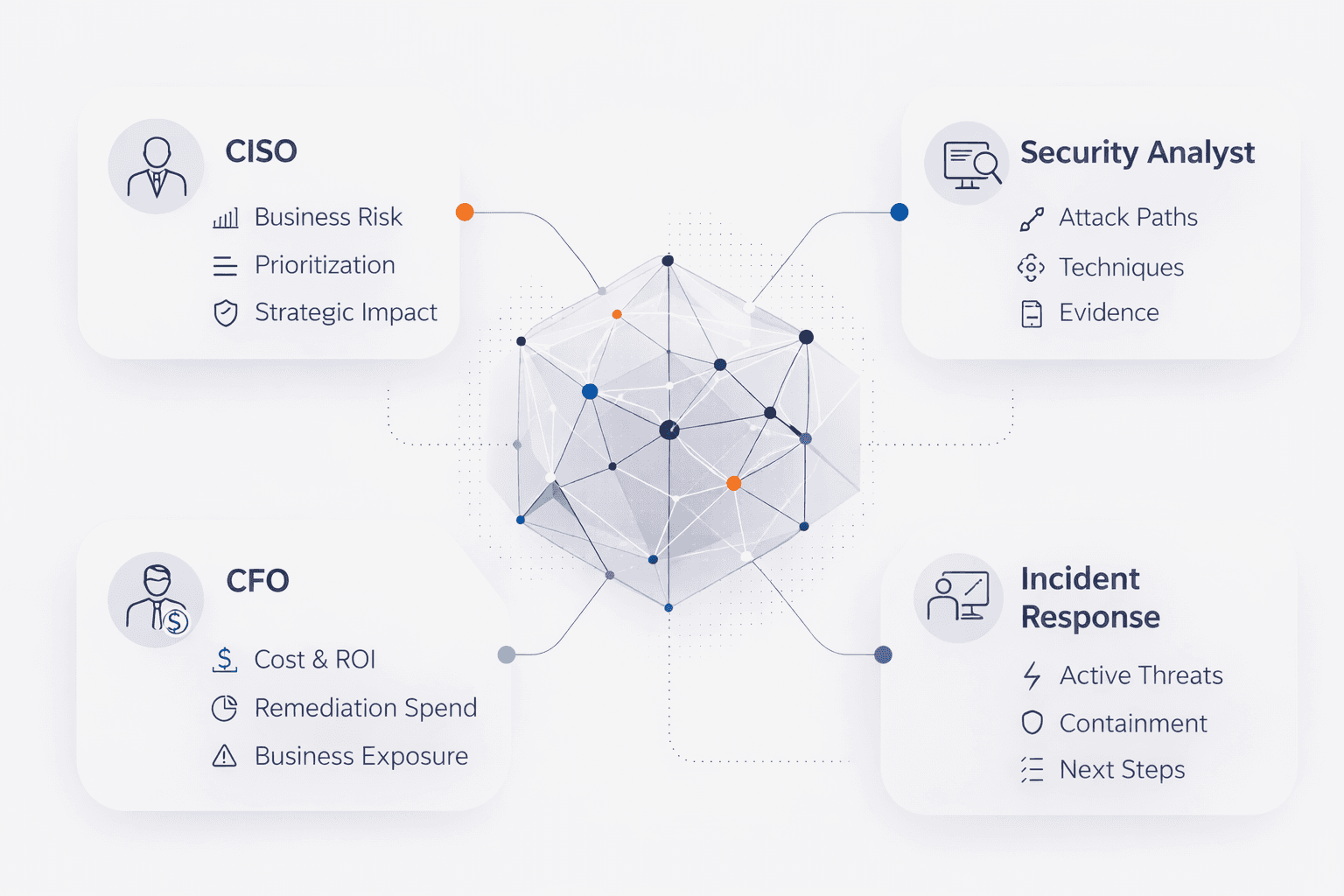
Attack Path design is particularly challenging because different users approach the problem from completely different perspectives.
Within the same platform, the interface may need to serve:
CISOs
Who need to understand strategic risk exposure.
Security analysts
Who need actionable remediation steps.
Security researchers
Who want deep visibility into attack techniques.
Incident response teams
Who must understand what is happening in real time.
FCOs and business leaders
Who need to understand the economic implications of risk and remediation.
Each of these roles is asking a different question.
What is the risk?
What should we fix first?
How does the attacker move?
What will it cost to solve this?
What is the business impact?
Yet most Attack Path interfaces attempt to answer all of these questions through a single static graph.
The result is often overwhelming rather than helpful.
What we call an Attack Path is usually a combination of several distinct models:
Attack Graph - how an attacker could move through the system
Attack Techniques - the methods used at each step
Risk Models - likelihood and impact of compromise
Remediation Paths - possible ways to close exposures
Prioritization Logic - what should be addressed first
Economic Considerations - the cost of fixing vulnerabilities
These models are often compressed into a single visualization.
But compressing complexity does not eliminate it.
It simply hides it.
Without thoughtful structure, the interface quickly turns into noise.
This led me to rethink the concept.
Instead of asking how to better visualize attack paths, the more important question might be:
How do we tell the story of an attack?
A useful interface should not only display technical relationships.
It should help security teams understand:
how an attacker could move
why it matters
where the critical choke points are
what exposures affect multiple paths
what the organization should fix first
how much it will cost to remediate
In other words, the goal is not just to visualize attacks.
It is to translate risk into action.
An effective Attack Path interface is not merely a visualization.
It is a cognitive interface for understanding risk.
Security professionals do not look at attack paths for curiosity.
They look at them to answer critical questions:
What is the real risk?
Where should we focus our efforts?
What action will reduce exposure the most?
Designing such an interface requires moving beyond graphs and focusing on decision-making.
One of the most important roles of UX in cybersecurity platforms is enabling different users to view the same environment through different perspectives.
The same underlying data might need to support:
a risk perspective for executives
an attack mechanics perspective for analysts
a remediation perspective for operational teams
a business impact perspective for leadership
Each perspective tells a different story about the same environment.
Good design does not force all users into one view.
It allows them to navigate between perspectives depending on the question they are trying to answer.
Another key challenge is resolution.
Not everyone needs the same level of detail. For example:
Executive View
High-level understanding of exposure, business impact, and priorities.
Operational View
Actionable remediation steps and prioritization.
Technical View
Detailed attack graphs, vulnerabilities, and techniques.
A mature Attack Path interface should allow users to move seamlessly between these levels.
Without forcing them to interpret unnecessary complexity.
Why This Matters
Modern security environments generate enormous amounts of information.
Alerts.
Assets.
Vulnerabilities.
Attack surfaces.
Security teams are not suffering from a lack of data.
They are suffering from a lack of clarity.
The role of product design is not to expose everything a system knows.
The role of design is to help people understand:
What matters, why it matters, and what to do next.
The Future of Attack Path Design
Attack Path interfaces still have enormous untapped potential.
Today, many implementations focus on visualization.
But the real opportunity lies in building systems that help security teams:
understand exposure
connect technical risk to business impact
evaluate remediation strategies
prioritize actions
and make better decisions faster.
When designed well, the Attack Path interface can become one of the most powerful decision tools inside cybersecurity platforms.
Not just a visualization, but a framework for understanding and managing risk.
A Simple Equation
Designing the path creates visualization.
Designing the story creates a decision system.
And in cybersecurity, decisions are what ultimately matter.